Christmas Deer Duo: A Versatile Holiday Font Family
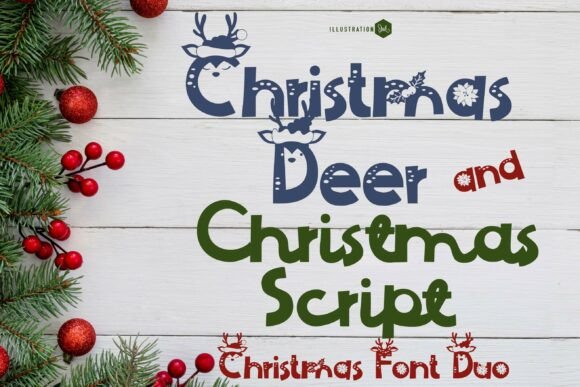
Finding typography that captures the specific warmth of the holiday season without resorting to clichés is a common challenge for designers and creators. Christmas Deer Duo addresses this need by offering a comprehensive, hand-crafted type system rather than a single novelty face. This collection combines three distinct styles—a reindeer-esque sans serif, a complementary serif, and a coordinated script—into one cohesive package. When you include the bonus tag dingbat font and account for all family members across the two main fonts, you gain access to six versatile tools designed specifically for high-impact seasonal projects.
The value of this duo lies in its internal consistency. Instead of searching for separate fonts that might clash in weight or texture, you receive a pre-matched ecosystem. The playful, hand-crafted feel suggests human touch and tradition, making it an excellent choice for projects that require emotional resonance. Whether you are designing physical goods, digital assets, or educational materials, understanding how to leverage these six font variations can elevate your seasonal work from generic to genuinely memorable.
Deconstructing the Typeface Anatomy
To use Christmas Deer Duo effectively, it helps to understand the specific role each component plays within a layout. The collection is not merely decorative; it is functional. The reindeer-esque sans serif serves as the structural backbone. Its unique character shapes evoke antlers and organic forms without sacrificing legibility. This makes it suitable for headlines, packaging labels, and short bursts of text where personality is paramount but readability cannot be compromised.
The serif version provides necessary contrast. In typography, pairing a display sans with a readable serif creates visual hierarchy and guides the viewer’s eye. This serif variant retains the hand-drawn charm of the set but offers more traditional letterforms, making it ideal for body copy, longer greetings, or secondary information on tags and cards. Finally, the coordinated script acts as the emotional accent. Because it was designed alongside the other two faces, its stroke width and slant harmonize perfectly, eliminating the awkward spacing issues often found when mixing scripts from different foundries.
The inclusion of the bonus tag dingbat font is a practical addition for product designers. These vector-based icons can serve as standalone graphics, bullet points, or decorative borders. For small business owners creating physical packaging, having matching iconography built into the font file streamlines the workflow and ensures brand consistency across all touchpoints.
Applications for Print and Physical Products
The tactile nature of Christmas Deer Duo makes it exceptionally strong for print media. The slight imperfections inherent in hand-crafted type translate beautifully to textured papers and specialty printing techniques. When designing holiday cards, consider using the sans serif for the primary greeting and the script for personalization or signatures. This mimics the natural rhythm of handwritten correspondence while maintaining professional polish. For letterpress or foil stamping, the bold strokes of the sans serif hold ink well, while the serif remains crisp at smaller point sizes.
For those in the apparel and merchandise space, this typeface offers scalability. Custom seasonal apparel requires fonts that read clearly from a distance. The reindeer-inspired sans works effectively on sweatshirts and tote bags because its distinctive silhouette is recognizable even when scaled up. Conversely, the serif and script combinations are perfect for smaller items like enamel pins, embroidered patches, or woven labels. The dingbat tags can be used as standalone design elements on hangtags or as repeating patterns on wrapping paper, adding value to the product without requiring additional illustration work.
Children’s Christmas books represent another prime application. Young readers respond to type that feels approachable and storybook-like. The playful aesthetic of Christmas Deer Duo supports narrative engagement without being distracting. Designers can use the serif for the main story text to ensure reading fluency, reserving the sans serif and script for dialogue, sound effects, or chapter titles. This typographic variation helps early readers distinguish between narrative voice and character speech, adding a layer of functional design to the storytelling.
Digital Design and Festive Branding Strategies
Translating hand-crafted aesthetics to screens requires careful consideration of rendering and accessibility. While Christmas Deer Duo excels in display settings, digital designers must prioritize user experience. Use the sans serif and script primarily for hero images, social media graphics, and email headers. For website body copy or app interfaces, pair this duo with a highly legible system font or neutral web safe typeface. This ensures that the festive branding enhances the content rather than hindering navigation.
Social media content creators can utilize the full six-font family to create template systems. By assigning specific roles to each font style—for example, always using the script for quotes and the sans serif for announcements—you build visual recognition over time. The dingbat font is particularly useful for Instagram Stories or Pinterest pins, where quick visual cues help categorize content. Creating a set of branded overlays using these dingbats allows for rapid content production during the busy holiday season while maintaining a cohesive look.
For marketers running seasonal campaigns, consistency builds trust. Using Christmas Deer Duo across ads, landing pages, and email newsletters creates a unified campaign identity. However, restraint is key. Let the typography breathe. Hand-crafted fonts carry significant visual weight; overcrowding them with other decorative elements can reduce their impact. White space allows the unique details of the reindeer-esque forms to stand out, ensuring the message remains clear and the design feels premium rather than chaotic.
Best Practices for Typographic Hierarchy
Achieving balance with a multi-font family requires intentional hierarchy. With six fonts available, the temptation to use them all simultaneously can lead to visual noise. A practical approach is to limit active usage to two or three styles per individual design piece. Establish rules before starting a project:
- Primary Headline: Reindeer Sans Serif (Large scale, high contrast)
- Secondary Info: Serif (Medium scale, grounding element)
- Accent/Emotion: Script (Selective use for emphasis only)
- Decoration: Dingbats (Borders, dividers, or background texture)
Color selection also plays a crucial role in how these fonts perform. Dark, saturated colors tend to emphasize the hand-drawn texture, while lighter pastels can soften the overall mood. Test your color and font combinations at actual size before finalizing. What looks charming on a large monitor may become illegible on a printed tag or mobile screen. Always verify that the playful nature of the typeface does not compromise the communication of essential information like dates, prices, or safety warnings.
Ultimately, Christmas Deer Duo succeeds because it treats holiday typography as a design system rather than a temporary decoration. By respecting the distinct functions of the sans, serif, script, and dingbat components, creators can produce work that feels both nostalgically warm and professionally executed. Whether applied to a child’s storybook, a boutique’s seasonal rebrand, or a family’s annual card, this collection provides the structural flexibility needed to make creative visions tangible. The result is seasonal design that resonates deeply because it balances artistic expression with clear, effective communication.