Evaluating Monogram School for Educational Branding and Design
Selecting typography for educational institutions requires balancing aesthetic appeal with functional clarity. Administrators, designers, and educators often seek typefaces that convey authority and tradition while remaining accessible to students and parents. Monogram School has emerged as a notable option in this niche, offering a distinct blend of decorative style and utilitarian robustness. Understanding the specific characteristics, appropriate applications, and limitations of this font is essential for making an informed design decision.
Defining the Monogram School Typeface
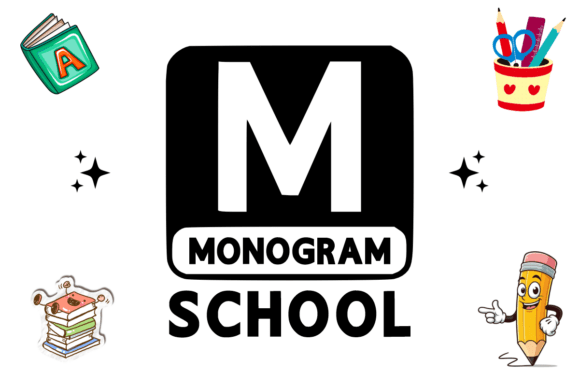
Monogram School is categorized as a monogram-style decorative font, but its execution differs significantly from ornate or script-based alternatives. It is defined by strong geometric forms and a straightforward structure that prioritizes legibility over embellishment. The typeface carries a rich educational feel, evoking the visual language of traditional academia without appearing dated or overly formal.
Unlike standard serif or sans-serif body fonts, Monogram School is designed primarily for display purposes. Its robust construction ensures that letterforms remain distinct even at larger sizes or when reproduced on various media, from digital screens to physical signage. This focus on clarity and impact makes it a practical tool for environments where communication must be immediate and unambiguous.
Primary Use Cases and Applications
The versatility of Monogram School stems from its ability to bridge the gap between institutional formality and approachable friendliness. Evaluators should consider this typeface for specific high-visibility applications rather than general text layout.
- School Branding and Identity: The font’s authoritative yet welcoming tone makes it suitable for logos, letterheads, and official communications. It signals stability and tradition, which can be reassuring to parents and stakeholders.
- Library and Facility Signage: In learning environments, wayfinding is critical. The geometric clarity of Monogram School allows for quick recognition from a distance, making it effective for room numbers, section headers, and directional signs.
- Children’s Educational Materials: For younger demographics, readability is paramount. The clean lines and lack of confusing serifs help early readers distinguish characters easily, supporting literacy development in workbooks and classroom posters.
- Sports Team Logos: Athletic branding requires boldness and energy. The robust weight of this typeface provides the necessary visual strength for jerseys, banners, and scoreboards without sacrificing the academic association.
- Digital Interfaces: On websites and apps, Monogram School functions well as a heading font. It creates a clear visual hierarchy, distinguishing navigation elements and titles from body copy while maintaining fast load times due to its simple geometry.
Benefits for Institutional Design
When comparing Monogram School against other decorative or educational fonts, several practical advantages become apparent. These benefits address common pain points in institutional design projects.
Legibility and Accessibility
Many decorative fonts sacrifice readability for style, creating barriers for users with visual impairments or learning differences. Monogram School maintains high legibility standards through consistent stroke widths and open counters. This aligns with accessibility goals, ensuring that materials are inclusive for diverse student populations and compliant with general readability guidelines.
Tonal Balance
Educational branding often struggles to avoid two extremes: sterile corporate aesthetics or childish cartoonishness. Monogram School occupies a middle ground. It possesses enough structural weight to command respect in administrative contexts while retaining a friendly geometry that appeals to students. This duality reduces the need for multiple display fonts within a single brand system.
Reproduction Reliability
Schools frequently produce materials across varying quality levels, from professional printing to office photocopies and vinyl cutting. Intricate fonts often degrade during these processes. The no-fuss, solid construction of Monogram School ensures it reproduces cleanly regardless of the output method, reducing production errors and waste.
Tradeoffs and Considerations
Despite its strengths, Monogram School is not a universal solution. A balanced evaluation requires acknowledging scenarios where this typeface may underperform or create friction.
Limited Body Text Utility
This typeface is strictly a display font. Using Monogram School for paragraphs, long-form articles, or dense documentation will result in reader fatigue and poor comprehension. Institutions must pair it with a highly readable sans-serif or serif typeface for body content. Relying on it for extended reading tasks is a significant misuse of the design.
Stylistic Specificity
While versatile within education, the font carries a distinct personality that may clash with certain institutional identities. Modern tech-focused academies, avant-garde art schools, or luxury private institutions might find the traditional geometric aesthetic too conventional. It is important to assess whether the font’s inherent "schoolhouse" vibe aligns with the specific brand positioning of the organization.
Character Set Limitations
Decorative fonts sometimes have restricted character sets compared to comprehensive text families. Before committing to Monogram School, verify that it includes all necessary glyphs, including special characters, numerals, and punctuation required for your specific language or formatting needs. Missing glyphs can disrupt layouts and require awkward substitutions.
Comparing Alternatives
To determine if Monogram School is the correct choice, it is helpful to compare it against common alternatives in the educational design space.
- Versus Standard Sans-Serifs (e.g., Arial, Helvetica): Standard sans-serifs offer superior neutrality and extensive character sets. Choose them if maximum flexibility and modern minimalism are priorities. Choose Monogram School if distinctiveness and thematic resonance are more valuable than neutrality.
- Versus Slab Serifs: Slab serifs also convey academic tradition but with a heavier, more historical weight. Monogram School offers a cleaner, more contemporary geometric feel. Opt for slab serifs for heritage universities; opt for Monogram School for K-12 or modern learning centers.
- Versus Handwritten/Script Fonts: Script fonts add warmth but often fail accessibility tests and reproduce poorly. Monogram School provides similar friendliness with significantly better functionality and professional polish.
Making the Final Selection Decision
The decision to adopt Monogram School should be driven by project requirements rather than aesthetic preference alone. Designers and administrators should use the following framework to validate their choice.
- Audit Communication Needs: List all intended touchpoints. If the majority are headlines, signage, or logos, Monogram School is a strong candidate. If the project involves textbooks or annual reports, it should only play a minor supporting role.
- Test in Context: Do not evaluate the font in isolation. Mock up actual signage, web headers, and merchandise. Assess how it interacts with existing brand colors and companion body fonts.
- Verify Technical Compatibility: Ensure the font file formats are compatible with your CMS, design software, and sign-making equipment. Check licensing terms to confirm coverage for both print and digital distribution.
- Gather Stakeholder Feedback: Because typography in education affects diverse audiences, solicit feedback from teachers, parents, and students. Their perception of readability and tone is the ultimate metric of success.
Monogram School represents a dependable, functional choice for organizations seeking to reinforce an educational identity without compromising clarity. By understanding its specific strengths in display applications and respecting its limitations regarding body text, designers can leverage this typeface to create cohesive, accessible, and authoritative visual environments. When aligned with the right goals, it serves as more than just a decorative element; it becomes a foundational component of effective institutional communication.