Evaluating Star Christmas: A Practical Guide to Festive Display Typography
Selecting the right typography for holiday projects often involves balancing thematic resonance with functional legibility. While standard serif and sans-serif typefaces provide safety and readability, they frequently lack the immediate seasonal context required for festive branding. Conversely, many novelty fonts sacrifice clarity for ornamentation, rendering them unusable for anything beyond a single headline. The Star Christmas decorative font occupies a specific niche in this spectrum, offering a hybrid approach that integrates illustrative elements directly into the glyph structure. For designers and content creators aged 20 to 50 who are curating assets for seasonal campaigns, understanding where this typeface fits within the broader ecosystem of holiday design resources is essential for making informed creative decisions.
Defining the Visual Characteristics of Star Christmas
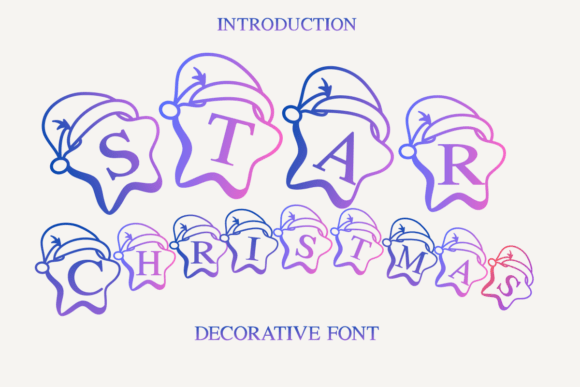
Star Christmas is categorized as a high-impact display typeface, but its distinction lies in the integration of vector art within the letterforms themselves. Unlike traditional fonts where decorations are applied as external overlays or separate clip-art elements, this collection nests alphabet characters inside star shapes. Each glyph is topped with a miniature Santa hat and features built-in soft light effects. This structural integration means the festive theme is intrinsic to the text rather than an afterthought.
From a technical design perspective, the font is constructed to support modern customization workflows. The vector-based nature of the glyphs allows for the application of gradients, shadows, and outlines without pixelation or loss of fidelity. This is a significant differentiator from rasterized novelty fonts or older decorative typefaces that lock users into a single color palette or style. When evaluating this asset, it is important to recognize that it functions less like a body copy solution and more like a modular illustration system that happens to be typed.
Comparing Integrated Illustration Fonts vs. Traditional Pairings
When planning holiday signage, apparel, or digital graphics, designers typically choose between two approaches: using a standalone decorative font or pairing a clean typeface with external seasonal vectors. Understanding the tradeoffs between these methods helps determine if Star Christmas is the efficient choice for a specific project.
- Workflow Efficiency: Using Star Christmas eliminates the need to manually position individual stars, hats, or lights above each letter. For social media graphics or quick-turnaround merchandise designs, this integrated approach significantly reduces production time compared to composing a scene from separate assets.
- Visual Cohesion: Because the decorative elements share the same baseline, x-height, and stylistic weight as the letters, the resulting text block has a uniform rhythm. External clip art often varies in line weight or lighting style, requiring additional editing to match the typography. Star Christmas guarantees consistency out of the box.
- Flexibility Limitations: The tradeoff for this cohesion is rigidity. If a design requires a minimalist aesthetic or needs to convey serious information alongside festive elements, an integrated font may be too visually loud. In such cases, a standard bold sans-serif paired with subtle, sparse iconography offers greater control over visual density.
Assessing Legibility and Application Boundaries
A primary concern when evaluating any decorative typeface is readability. Star Christmas prioritizes bold, readable letterforms despite the surrounding ornamentation, but it remains strictly a display font. It is engineered for headlines, logos, and short phrases rather than extended reading. When comparing it to other festive options, consider the viewing distance and medium.
For large-format applications like window decals, yard signs, or stage backdrops, the intricate details of the Santa hats and light effects remain distinct and contribute to the overall charm. However, at small sizes—such as on business cards, mobile app interfaces, or embroidered patches—these fine details may merge or become indistinguishable. In scenarios requiring small-scale festivity, simpler hand-lettered scripts or textured serifs often perform better because they rely on form rather than detail to convey mood.
Furthermore, the "cute" and whimsical tone of Star Christmas dictates its demographic fit. It excels in contexts targeting families, children, or playful consumer brands. It is ideally suited for:
- Children’s Christmas cards and party invitations
- Festive apparel and textile prints
- Playful retail signage and point-of-sale displays
- Social media stories and engagement graphics
Conversely, for corporate communications, luxury branding, or formal event stationery, this typeface may clash with the desired tone. Professionals evaluating this font should assess whether the inherent playfulness aligns with their brand voice or if a more sophisticated, understated holiday aesthetic is required.
Customization Potential and Technical Versatility
One of the strongest arguments for selecting Star Christmas over static novelty fonts is its adaptability. Many decorative fonts are delivered as flattened images or single-color vectors, limiting their utility across different background colors or brand guidelines. Star Christmas is designed to accept standard typographic treatments.
The ability to apply custom gradients allows designers to match the font to specific brand color palettes while retaining the festive shape language. Adding drop shadows can enhance contrast against busy photographic backgrounds, a common requirement in holiday marketing materials. Outlines can be adjusted to create a sticker-like effect for decals or to improve visibility on dark surfaces. This level of malleability makes it a more versatile long-term asset than single-use decorative graphics. When comparing resources, prioritize fonts that offer this degree of post-purchase customization, as they provide higher ROI across multiple projects and seasons.
Decision Factors: When to Choose Alternatives
While Star Christmas offers a unique blend of charm and utility, it is not a universal solution. A balanced evaluation requires acknowledging when alternative resources are superior.
Choose Star Christmas When:
- The project demands immediate, unmistakable holiday recognition without complex composition.
- The target audience responds to whimsy, nostalgia, and bright visuals.
- You need a headline font that doubles as an illustrative element.
- Production timelines are tight, and manual illustration is not feasible.
Consider Alternatives When:
- Body Text is Required: Never use this font for paragraphs. Pair it with a highly legible geometric sans-serif or a warm humanist serif for supporting copy.
- Minimalism is Key: If the design brief specifies "elegant," "modern," or "subtle," look for high-contrast serifs or monoline scripts instead.
- Small Scale Dominates: For favicon-sized icons or fine print, the detail density will fail. Opt for simplified symbols or texture-based typography.
- Unique Brand Identity is Critical: Because decorative fonts can become trendy quickly, exclusive luxury brands might prefer custom lettering to avoid any risk of visual similarity with other seasonal campaigns.
Making an Informed Resource Selection
Ultimately, the decision to incorporate Star Christmas into a design toolkit should be based on specific project parameters rather than general seasonal appeal. It represents a category of typography that bridges the gap between text and image, solving the problem of how to make words feel festive without resorting to cliché clip-art collages.
For professionals managing diverse holiday portfolios, this font serves as a reliable workhorse for high-energy, family-oriented deliverables. Its strength lies in its specificity; it does one thing exceptionally well. By understanding its limitations regarding scale, tone, and text hierarchy, designers can leverage its whimsical character effectively while avoiding common pitfalls associated with novelty typography. Evaluating it against the backdrop of your specific needs—rather than against every other Christmas font available—ensures that the selection adds genuine value to your creative output. Whether used for a vibrant storefront banner or a cheerful digital greeting, Star Christmas provides a distinct visual shorthand for joy, provided it is deployed with intention and awareness of its optimal use cases.