Evaluating With Love Valentine Font for Authentic Design
Selecting the appropriate typeface is a critical decision in visual communication, particularly when the design objective centers on emotion, intimacy, and personal connection. With Love Valentine is a modern script typeface designed to address these specific needs by simulating the spontaneity of genuine handwriting. For designers, marketers, and individuals evaluating typography options, understanding the functional characteristics and aesthetic limitations of this font is essential. This analysis explores the technical attributes, practical applications, and decision-making factors associated with With Love Valentine to determine its suitability for projects requiring a refined yet natural expression of affection.
Defining the Typographic Character
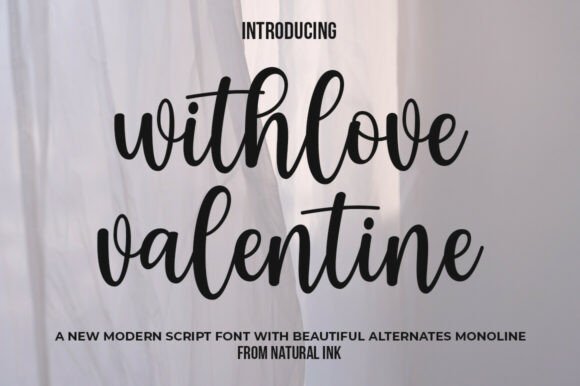
With Love Valentine distinguishes itself through a smooth, monoline stroke structure. Unlike high-contrast scripts that mimic calligraphy pens or brushes, this typeface maintains a consistent line weight throughout. This uniformity contributes to a contemporary aesthetic that remains legible at various sizes while retaining the organic flow of hand-lettering. The design features elegant, looping ascenders and descenders that create a rhythmic vertical cadence, preventing the text from appearing static or overly mechanical.
A defining feature for evaluation purposes is the inclusion of extensive alternates and stylistic sets. These OpenType features allow users to customize swashes, adjust terminal endings, and vary letterforms within a single word. This capability is significant because it mitigates the repetitive nature often found in digital script fonts. By enabling manual variation, the typeface supports a more authentic, bespoke appearance that aligns with the unpredictability of actual handwriting. When assessing this font, one must consider not just the default glyphs, but the potential unlocked through these customization tools.
Primary Use Cases and Strategic Fit
The versatility of With Love Valentine makes it a strong candidate for several specific design categories. Evaluators should consider its alignment with the following contexts:
- Wedding and Event Stationery: The font’s romantic undertones and formal elegance make it suitable for invitations, save-the-dates, and place cards. The ability to customize swashes allows for unique header treatments that differentiate premium stationery suites from generic templates.
- Product Packaging: For industries such as confectionery, beauty, and artisanal gifts, packaging must convey warmth and quality. With Love Valentine provides a human touch that suggests care and craftsmanship, which is particularly effective for limited-edition or luxury items where mass-produced aesthetics are undesirable.
- Social Media Content: In digital environments, sophisticated script can arrest scrolling behavior. The font performs well in quote graphics, announcements, and lifestyle branding where the goal is to foster emotional engagement rather than merely transmit information.
- Personalized Messaging: Beyond commercial use, the typeface serves individual creators seeking to elevate personal correspondence, journals, or digital art with a layer of typographic refinement that standard system fonts cannot provide.
Benefits and Functional Advantages
When comparing With Love Valentine against other script options, several functional benefits emerge. The primary advantage is the balance between refinement and naturalism. Many scripts lean too heavily toward ornate formality, making them feel dated, or too far toward casual messiness, compromising professionalism. This typeface occupies a middle ground that feels current and approachable without sacrificing elegance.
Furthermore, the monoline construction offers practical reproduction benefits. Because there are no hairline strokes, the font reproduces reliably across different media, including embroidery, foil stamping, and low-resolution screens. Thin lines in high-contrast scripts often break during printing or pixelate digitally; With Love Valentine’s consistent weight reduces this risk, ensuring design integrity across physical and digital touchpoints.
The extensive alternate library also extends the font's lifespan. A designer can use the same typeface for multiple clients or campaigns without the work looking identical, provided they utilize the stylistic variations effectively. This flexibility improves the return on investment for licensing the font.
Tradeoffs and Practical Considerations
No typeface is universally applicable, and objective evaluation requires acknowledging limitations. Users considering With Love Valentine must be aware of the following tradeoffs:
- Legibility at Small Sizes: While the monoline stroke aids clarity, the looping ascenders and descenders reduce effective x-height. At very small point sizes (below 14pt depending on output), the intricate details may merge, hindering readability. It is best reserved for display purposes, headlines, or short phrases rather than body copy.
- Learning Curve for Alternates: Accessing and implementing stylistic alternates requires software that supports OpenType features (e.g., Adobe Illustrator, InDesign, Affinity Designer). Users relying on basic word processors or simplified design tools may only access the default character set, significantly reducing the font's expressive potential.
- Tone Specificity: The font is inherently romantic and soft. It may clash with brands or messages requiring authority, neutrality, or corporate rigidity. Attempting to force this typeface into an inappropriate context can create cognitive dissonance for the viewer.
- Spacing Requirements: Script fonts rely on connecting strokes. Manual kerning is often necessary when using alternates to ensure connections remain fluid. Automated tracking adjustments can break the script illusion, requiring additional time and typographic skill during the layout phase.
When to Consider Alternatives
While With Love Valentine excels in expressing genuine affection, alternative typefaces may be superior in specific scenarios. If the project demands high-volume body text, a serif or sans-serif typeface with complementary styling is necessary for accessibility and reading comfort. For designs targeting a Gen Z demographic or streetwear aesthetic, a more erratic, marker-style script might better capture the desired raw energy compared to this font’s polished elegance.
Additionally, if the budget does not permit purchasing a license that includes full OpenType functionality, or if the user lacks the software to utilize it, a simpler script with fewer dependencies might yield better results. Using a complex font incorrectly often looks worse than using a simple font correctly. Evaluators should honestly assess their technical capacity before committing to a typeface that relies heavily on advanced features for its intended effect.
Making the Final Selection Decision
Determining whether With Love Valentine aligns with project goals requires testing beyond static previews. Designers should typeset actual project content using the font to evaluate spacing, connection points, and overall mood in context. Verify that the specific alternates needed for the design vision are included in the available license tier. Consider the final output medium; test print proofs if the end product is physical, and check rendering on mobile devices if digital.
Ultimately, With Love Valentine is a specialized tool for conveying warmth and sophistication. It succeeds when the design intent matches its inherent characteristics: spontaneous yet controlled, romantic yet modern. By weighing its expressive capabilities against practical constraints like legibility and software requirements, designers can make an informed choice that enhances their message authentically. When the goal is to unveil genuine affection through typography, this typeface offers a compelling solution, provided it is applied with intention and technical awareness.