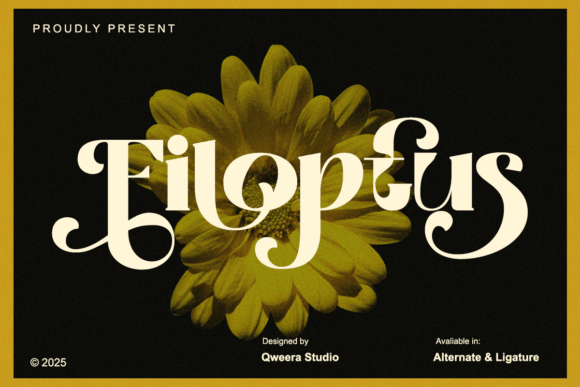
Filoptus: Integrating Elegant Modern Serif Typography into Professional Design Workflows
Selecting the right typeface is rarely just an aesthetic choice; it is a strategic decision that influences brand perception, readability, and production efficiency. Filoptus represents a specific category of elegant modern serif designed to bridge the gap between high-impact display typography and functional versatility. Characterized by bold strokes, expressive swashes, and artistic ligatures, this typeface serves as a primary visual anchor for projects requiring upscale sophistication. For designers, marketers, and business owners, understanding how to integrate Filoptus into a broader creative workflow ensures that the font enhances rather than complicates the design process.
In professional environments, typography must perform across multiple touchpoints. Filoptus fits into the workflow as a headline and branding solution, specifically tailored for logos, magazine titles, posters, wedding invitations, beauty branding, and luxury product packaging. Its strong visual presence makes it ideal for capturing attention in digital feeds and print layouts alike. However, successful implementation requires planning regarding hierarchy, pairing, and technical compatibility before the design phase begins.
Strategic Planning and Pre-Design Assessment
Before opening design software, professionals should evaluate whether Filoptus aligns with the project’s communication goals. This typeface carries a distinct personality that signals luxury, tradition, and modernity simultaneously. During the discovery phase of a branding or editorial project, assess the target audience's expectations. If the goal is to convey approachability or utilitarian function, a neutral sans-serif may be more appropriate. However, if the objective is to establish authority, elegance, or premium value, Filoptus provides the necessary typographic weight.
Preparation also involves auditing existing brand assets. When introducing Filoptus to an established visual identity, review current color palettes, photography styles, and layout grids. The bold strokes and artistic ligatures of this serif demand sufficient negative space to breathe. Crowded layouts diminish its impact. During the planning stage, allocate specific zones in your grid system where the typeface can function as a standalone element. This proactive organization prevents layout conflicts later in the execution phase.
Evaluating Technical Requirements Early
Efficiency in design workflows often depends on anticipating technical constraints. Before purchasing or licensing Filoptus, verify file format compatibility with your primary tools. Ensure you have access to OpenType features, as the expressive swashes and ligatures are typically stored within these alternate character sets. Confirming that your version includes comprehensive language support and symbol sets prevents mid-project delays. For web-based projects, check load times and rendering performance early, as intricate serifs can sometimes suffer from hinting issues on low-resolution screens.
Execution: Leveraging Typographic Features Effectively
Once integrated into the active design phase, the value of Filoptus lies in its detailed craftsmanship. Simply setting text in this font does not guarantee a polished result. Professionals must actively engage with the OpenType panel in applications like Adobe Illustrator, InDesign, or Affinity Designer. The artistic ligatures included in the family are designed to solve spacing issues between specific letter combinations while adding decorative flair. Using standard kerning instead of activating these ligatures misses a core functional benefit of the typeface.
The expressive swashes serve a dual purpose: decoration and composition. In poster design or magazine covers, use swash alternates to fill awkward negative spaces or to create a custom lockup without resorting to vector manipulation. This maintains the integrity of the original type design while allowing for bespoke customization. For wedding invitations and luxury packaging, these swashes guide the viewer’s eye through the information hierarchy, creating a sense of flow and movement that rigid geometry cannot achieve.
- Activate Contextual Alternates: Enable this feature to automatically adjust letterforms based on their position within a word, ensuring consistent texture.
- Manual Ligature Selection: While auto-ligatures are useful, manually selecting specific artistic connections allows for greater control over the logo or title’s silhouette.
- Swash Management: Avoid using swashes on every capital letter. Reserve them for initials or terminal characters to maintain legibility and prevent visual clutter.
- Kerning Adjustment: Even with advanced programming, optical kerning adjustments are often necessary when scaling Filoptus to very large sizes for signage or billboards.
Integration with Supporting Assets and Tools
Filoptus functions best when treated as part of a cohesive typographic system rather than a solitary element. Because it is a display serif with significant personality, it requires a supportive secondary typeface for body copy and functional text. Pairing strategies should focus on contrast and neutrality. A clean geometric sans-serif or a highly readable humanist sans-serif typically complements the ornate nature of Filoptus without competing for attention.
In digital workflows, consider how the font interacts with UI components. While Filoptus excels in hero sections and navigation headers, it may reduce scanning speed in dense paragraphs or small interface labels. Establish clear style guides that dictate exactly where the serif applies and where the supporting sans-serif takes over. This consistency improves user experience and streamlines the handoff between designers and developers. For print production, communicate with printers regarding ink spread and paper stock. Bold strokes on uncoated paper may bleed slightly, altering the delicate balance of the serifs. Requesting a physical proof ensures the on-screen elegance translates accurately to the final substrate.
Workflow Efficiency Across Platforms
For freelancers and agencies managing multiple client accounts, organizing font assets is crucial for long-term efficiency. Create dedicated project folders containing the licensed Filoptus files alongside the chosen pairing fonts and brand guidelines. This reduces time spent searching for specific weights or alternates during revision rounds. When collaborating with teams, utilize cloud-based font management services to ensure everyone accesses the same version. Discrepancies in font versions can cause missing glyph errors and layout shifts, disrupting approval timelines.
Quality Control and Long-Term Application
Maintaining visual quality requires ongoing evaluation. After implementing Filoptus in a campaign or brand identity, monitor its performance across different mediums. Check social media graphics on mobile devices to ensure the fine details remain crisp. Review printed collateral under various lighting conditions to verify contrast ratios meet accessibility standards. Luxury and elegance should never come at the cost of readability. If feedback indicates that the artistic elements are hindering comprehension, scale back the use of swashes or increase tracking to improve clarity.
Long-term use of Filoptus involves adapting to evolving trends while maintaining brand recognition. As a modern serif, it possesses enough classical structure to remain relevant beyond fleeting design fads. However, application styles should evolve. Rotate which ligatures and alternates are used seasonally to keep the visual identity fresh without abandoning the core typeface. This approach maximizes the return on investment for the font license and maintains consistency in brand messaging.
Documentation plays a vital role in sustaining quality. Create a typography usage guide specifically for Filoptus that includes do’s and don’ts. Show examples of correct ligature usage versus incorrect manual spacing. Provide approved pairing combinations and minimum size recommendations. When new team members or external vendors join the project, this documentation serves as a practical reference, reducing the learning curve and preventing common typographic errors. By treating the typeface as a managed asset rather than a disposable decoration, professionals ensure that Filoptus continues to deliver upscale sophistication and strong visual presence throughout the lifecycle of the project.
Ultimately, the successful integration of Filoptus relies on balancing its expressive capabilities with practical design principles. It is a tool for elevation, best used with intention and restraint. Whether applied to a high-end beauty label, a sophisticated editorial spread, or a boutique wedding suite, the font delivers results when supported by thoughtful planning, technical proficiency, and systematic organization. By embedding these practices into your workflow, you transform a beautiful typeface into a reliable engine for professional communication and brand building.