Grave Echo: Mastering the Art of Horror Typography in Modern Design
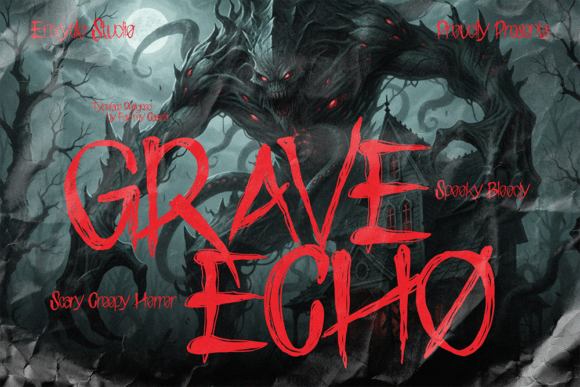
In the vast landscape of graphic design, typography serves as the voice of visual communication. While clean sans-serifs and elegant serifs dominate corporate branding and editorial layouts, there exists a specialized niche where readability takes a backseat to raw emotion and atmosphere. Enter Grave Echo, a bold display typeface that has carved out a significant space in the world of horror aesthetics. This font is not merely a collection of letters; it is a carefully crafted instrument designed to evoke the eerie, unsettling atmosphere of classic horror cinema and literature.
For designers, event planners, and content creators, understanding how to leverage a typeface like Grave Echo is essential for projects that demand an authentic scary vibe. Whether you are designing a Halloween poster, titling an indie horror film, or creating merchandise for a haunted attraction, the choice of font dictates the viewer's emotional response before they even process the message. This article explores the significance of Grave Echo, its practical applications in modern creative work, and how to utilize it effectively without sacrificing professional standards.
The Psychology of Fear in Typeface Design
To understand why Grave Echo is effective, one must first understand the psychology behind horror typography. Fonts communicate on a subconscious level. Rounded, soft edges suggest safety and approachability, while sharp angles, irregular baselines, and distressed textures trigger feelings of unease and danger. Grave Echo capitalizes on these psychological cues by utilizing unique, chilling letterforms that mimic the imperfections found in decaying environments or frantic handwriting.
Unlike generic "scary" fonts that often rely on cliché tropes like dripping blood or excessive jaggedness, Grave Echo offers a more sophisticated approach to terror. It balances the grotesque with the structural integrity required for legibility. This distinction is crucial in professional design. A font that is too chaotic becomes unreadable noise, failing to convey the intended message. Grave Echo succeeds because it maintains the boldness necessary for headlines while retaining enough form to ensure the audience can actually read the title or tagline. This balance makes it a versatile tool for both artistic expression and functional communication.
Bridging Classic Horror and Contemporary Aesthetics
One of the most common misunderstandings about horror design is that it must always look modern or digital to be relevant. However, current trends show a massive resurgence in vintage and retro horror aesthetics. Audiences are drawn to the nostalgia of 1970s grindhouse posters and 1980s slasher VHS covers. Grave Echo fits perfectly into this intersection of old and new.
While the font possesses a timeless quality reminiscent of classic monster movies, its vector-based construction ensures it performs flawlessly in modern digital workflows. It scales without losing detail, making it suitable for everything from massive billboards to Instagram stories. For designers working in the entertainment industry, this versatility means Grave Echo can serve as a unifying visual element across a multi-platform marketing campaign, linking physical posters with digital ads through a consistent, terrifying typographic voice.
Practical Applications Across Industries
The utility of Grave Echo extends far beyond simple Halloween decorations. Its bold, impactful visuals make it a staple in various professional sectors where capturing attention is paramount. Understanding where and how to apply this typeface can elevate a project from amateur to professional.
- Event Marketing and Promotion: Haunted houses, escape rooms, and horror conventions rely heavily on atmosphere to sell tickets. Using Grave Echo in promotional materials sets expectations immediately. The font acts as a visual promise of the experience awaiting the attendee, creating hype and establishing brand identity.
- Film and Television Titling: In the competitive streaming market, thumbnail art and title cards must grab viewers instantly. Grave Echo’s heavy weight ensures high contrast against dark backgrounds, a common trope in horror cinematography. Its distinct silhouette helps titles stand out in crowded browse menus.
- Merchandise and Apparel: Horror culture has a thriving merchandise ecosystem. T-shirts, stickers, and enamel pins featuring spooky typography are perennial sellers. Because Grave Echo is designed as a display face, it creates strong, standalone graphics that do not require additional illustration to be visually interesting.
- Editorial and Publishing: Book covers for thrillers, true crime, and supernatural fiction benefit from this typeface. It signals genre conventions to readers browsing bookstores or online retailers, helping the right audience find the right content quickly.
Navigating Readability and Atmosphere
A frequent challenge when working with thematic display fonts is maintaining accessibility and clarity. A common assumption among beginners is that "scarier" equals "better," leading to designs where the text is illegible. Grave Echo mitigates this risk through its thoughtful construction, but designers must still apply best practices.
When using this typeface, treat it as a headline or accent element rather than body copy. Pairing Grave Echo with a clean, neutral sans-serif or a classic serif for supporting text creates a necessary visual hierarchy. This contrast not only improves readability but also amplifies the impact of the horror font itself. The silence of the negative space and the stability of the secondary font make the chaos of Grave Echo feel more intentional and pronounced. Furthermore, ensuring sufficient color contrast between the text and background is vital. White or blood-red text on a black background remains the gold standard for a reason—it maximizes legibility while reinforcing the mood.
The Role of Display Typefaces in Creative Education
For students and emerging designers, studying typefaces like Grave Echo offers valuable lessons in stylistic expression and constraint. Design education often focuses heavily on Swiss Style and grid-based rationalism. While foundational, this can sometimes limit a designer's ability to express emotion through type. Incorporating horror typography into a curriculum teaches students that rules can be broken purposefully.
Analyzing the anatomy of Grave Echo reveals how subtle manipulations of stroke width, terminal shape, and spacing can alter perception entirely. Students learn that typography is not just about arranging information but about curating an experience. This skill is transferable to all areas of design; understanding how to create tension in a horror poster helps a designer understand how to create trust in a banking app or excitement in a sports advertisement. It broadens the creative toolkit, encouraging experimentation and deeper empathy for the end-user’s emotional state.
Technical Considerations for Professional Use
When integrating Grave Echo into professional workflows, technical proficiency is as important as aesthetic judgment. As a display typeface, it is optimized for large sizes. Using it at small point sizes (below 24pt) may result in loss of detail and reduced legibility due to the intricate nature of the letterforms. Designers should always test their layouts at actual size or viewing distance to ensure the eerie details remain distinct rather than muddying together.
Additionally, licensing and usage rights are critical considerations for business and commercial projects. Ensuring you have the appropriate license for Grave Echo protects your client and respects the type designer’s intellectual property. Many designers overlook this step when sourcing free fonts, leading to legal complications later. Investing in legitimate licenses for premium horror typefaces also often grants access to alternate characters, ligatures, and OpenType features that can further customize the look, preventing your design from looking identical to others using the same font.
Elevating Projects with Authentic Horror Aesthetics
Ultimately, Grave Echo represents more than just a stylistic choice; it is a solution to a specific communication problem. In a digital age saturated with polished, minimalist design, there is a profound human desire for the visceral, the tactile, and the mysterious. This typeface taps into that cultural current, providing a bridge between the creator’s vision and the audience’s imagination.
Whether you are a seasoned art director refining a movie campaign or a hobbyist creating invitations for a neighborhood haunt, the principles remain the same. Success lies in respecting the power of the typeface while grounding it in solid design fundamentals. By understanding the history, psychology, and practical application of Grave Echo, creators can move beyond superficial spookiness to achieve genuine atmospheric resonance. The result is design that does not just show a scary word, but makes the viewer feel the chill of the grave echo itself.
Incorporating such a distinctive typeface requires courage and restraint. It demands that the designer step away from safety and embrace the uncomfortable. Yet, it is precisely within that discomfort that the most memorable and effective horror design lives. As the boundaries of digital creativity continue to expand, tools like Grave Echo ensure that the ancient art of storytelling through fear remains vibrant, readable, and undeniably powerful in the modern era.