Magicluzzk: Evaluating a Gothic Display Typeface for Horror and Music Design
In the specialized world of typographic design, few niches demand as much specific atmospheric weight as horror and heavy music. While thousands of "scary" fonts exist in digital marketplaces, many fail to translate beyond low-resolution thumbnails or amateur projects. Magicluzzk distinguishes itself within this crowded category by offering a haunting, evocative display typeface that draws directly from the lineage of classic monster cinema, vintage Halloween ephemera, and underground music aesthetics. For designers, marketers, and creators working within dark genres, understanding the practical utility of this font is essential before integrating it into professional workflows.
Magicluzzk is not designed for body copy or functional interface text. It is a purpose-built tool for high-impact visual communication where legibility takes a secondary role to mood and texture. Its value lies in its ability to instantly establish a genre-specific tone without requiring extensive post-processing or texture overlays. This analysis explores the typeface’s technical characteristics, optimal use cases, and realistic limitations for professionals aged 20–50 who require reliable creative assets.
Design Characteristics and Aesthetic Lineage
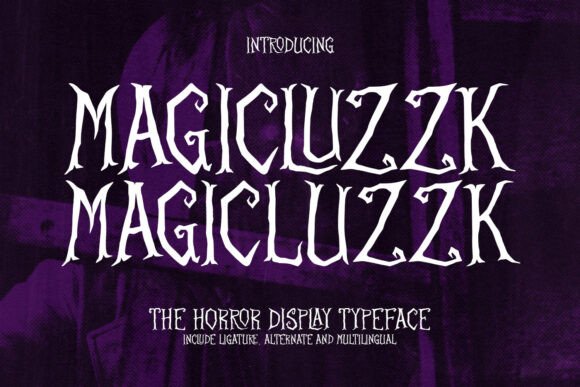
To evaluate Magicluzzk effectively, one must understand its visual DNA. The typeface avoids the common pitfall of relying solely on digital distortion or excessive grunge filters. Instead, it mimics the organic imperfections found in mid-20th-century print media and hand-painted signage associated with early horror cinema. The letterforms possess an irregular rhythm that suggests manual creation rather than algorithmic generation, which is crucial for maintaining authenticity in an era of AI-generated imagery.
The strokes exhibit varying weights and rough edges that interact predictably with different background textures. Unlike cleaner gothic revivals, Magicluzzk embraces a chaotic structure that remains cohesive across uppercase and lowercase sets. This consistency is vital for band logos or album titles where character spacing and alignment can often break the immersion if individual glyphs feel disjointed. The font captures the chilling aesthetics of the underground music scene by balancing aggression with a sense of decay, making it suitable for both visceral punk designs and more atmospheric black metal visuals.
Practical Applications in Professional Workflows
For freelancers and agency designers, time efficiency is as important as aesthetic quality. Magicluzzk serves as a foundational element that reduces the need for custom lettering in initial concept phases. Its primary applications fall into four distinct categories where its specific traits offer measurable advantages.
Band Logos and Album Art
In the metal, hardcore, punk, and rock genres, typography often functions as a primary brand identifier. Magicluzzk provides a raw, unpolished foundation that communicates genre allegiance immediately. When designing merchandise or streaming platform artwork, the font’s inherent texture holds up well at various scales. It pairs effectively with high-contrast photography and distressed textures, allowing designers to create compelling visuals without spending hours manually eroding vector paths. However, users should note that because of its intricate details, it performs best against solid or simply textured backgrounds; complex photographic backdrops may compete with the letterforms and reduce readability.
Halloween and Seasonal Promotions
Marketers and small business owners frequently face tight deadlines for seasonal campaigns. Magicluzzk offers a sophisticated alternative to cartoonish or overly gory novelty fonts often associated with Halloween. Its vintage inspiration makes it appropriate for businesses seeking a nostalgic or eerie atmosphere rather than shock value. It works particularly well for event invitations, limited-edition product packaging, and social media headers. The font’s evocative nature helps elevate promotional materials from generic advertising to immersive brand experiences, potentially increasing engagement through stronger visual storytelling.
Publishing and Editorial Design
For publishers and authors in the horror, thriller, and dark poetry spaces, cover typography is a critical sales driver. Magicluzzk excels in creating dramatic titles that signal content expectations to potential readers. Its irregular baseline and jagged terminals contribute to a sense of unease that complements narrative tension. When used for chapter headings or pull quotes within interior layouts, it should be deployed sparingly to maintain impact. The font carries enough personality to stand alone without additional graphic elements, which can be beneficial for minimalist cover designs or budget-conscious self-publishing projects.
Gaming Graphics and Environmental Text
Game developers and UI artists working on horror titles require typography that reinforces environmental storytelling. Magicluzzk is effective for in-game signage, cursed texts, menu titles, and loading screens. Its analog quality contrasts interestingly with digital game environments, creating a dissonance that enhances the horror experience. For indie developers lacking dedicated typographers, this font provides a professional-grade asset that aligns with industry standards for the genre. It is particularly useful for establishing lore through diegetic text elements that need to appear aged or historically significant within the game world.
Technical Considerations and Usability
Beyond aesthetics, the practical value of any display font depends on its technical execution. Magicluzzk demonstrates competence in several key areas relevant to professional production.
- Legibility vs. Atmosphere: As with most horror display faces, there is a trade-off between style and readability. Magicluzzk maintains sufficient character distinction for short strings of text (titles, logos, headlines) but becomes difficult to parse in sentences longer than five or six words. Users must plan layouts accordingly and avoid using it for subheads or descriptive copy.
- Scaling Behavior: The font’s textured details are resolution-dependent. At very large sizes (poster or billboard scale), the rough edges remain crisp and intentional. At smaller sizes (web banners or mobile graphics), some fine details may fill in or appear muddy. Testing at final output size is recommended before committing to a layout.
- Pairing Compatibility: Magicluzzk demands neutral supporting typography. It pairs best with clean sans-serifs or traditional serifs that provide structural contrast. Avoid pairing it with other decorative or handwritten fonts, as the competing visual noise will undermine the design hierarchy.
- Licensing Awareness: Professionals must verify licensing terms for commercial use, especially for merchandise, book covers, and embedded game assets. Assuming personal-use licenses cover commercial projects is a common legal risk in creative industries.
Evaluating Long-Term Value and Limitations
No single typeface solves every design problem, and Magicluzzk has defined boundaries. Its highly specific aesthetic means it has a shorter shelf life than versatile workhorse fonts. Trends in horror and music design evolve, and what feels authentically vintage today may feel dated in five years. However, because it references historical sources rather than contemporary trends, it likely possesses greater longevity than purely stylistic novelty fonts.
A notable limitation is its lack of extended language support and OpenType features in some distributions. Designers working with non-Latin characters or requiring advanced ligatures may find the character set insufficient. Additionally, the font’s intense personality requires confident art direction; it cannot be dropped into a template and expected to work without adjustment. Kerning and tracking often require manual refinement due to the irregular glyph widths, adding time to the typesetting process.
Despite these constraints, Magicluzzk represents a valuable asset for its target audience. For adults working professionally or seriously in creative fields related to dark entertainment, seasonal marketing, or niche publishing, it fills a gap between generic freebies and expensive custom lettering. Its strength lies in its specificity—it does exactly what it claims to do, and it does so with a level of craftsmanship that respects both the history of the genre and the practical demands of modern design production.
Making the Decision for Your Project
Determining whether Magicluzzk fits your needs requires honest assessment of your project’s goals. If you are designing a corporate annual report, a wellness brand identity, or any interface requiring rapid information processing, this typeface is inappropriate regardless of personal taste. However, if your objective is to evoke dread, nostalgia, rebellion, or mystery within a culturally literate audience, Magicluzzk offers a reliable shortcut to authentic atmosphere.
Consider your workflow timeline and output requirements. If you need a quick, impactful solution for a Halloween campaign or a metal band’s EP release, this font delivers immediate results. If you are building a comprehensive brand system requiring multiple weights, italics, and extensive language support, you may need to supplement it with additional typefaces or commission custom modifications. Ultimately, Magicluzzk succeeds when treated as a specialized instrument rather than a universal tool—used with intention and restraint, it transforms ordinary layouts into memorable, genre-defining visual statements that resonate with audiences seeking genuine darkness over superficial spookiness.