The Art of the Islamic Wedding Invitation: Merging Geometric Tradition with Modern Design
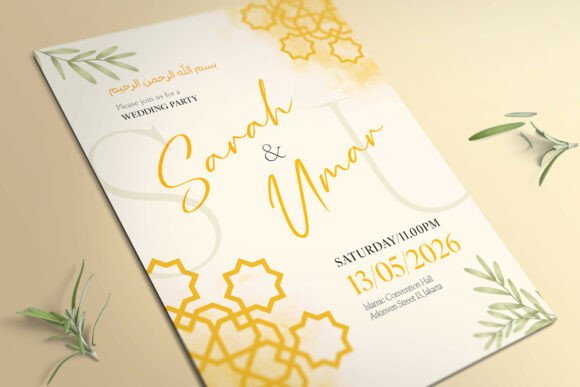
The intersection of cultural heritage and contemporary aesthetics defines the current landscape of matrimonial stationery. For Muslim couples, event planners, and graphic designers, the search for the perfect Islamic wedding invitation often involves balancing religious reverence with modern visual sensibilities. A standout solution in this niche is the modern template featuring elegant geometric patterns inspired by classical Islamic art. This specific design approach combines traditional motifs with a clean, contemporary layout, serving as an ideal medium for Nikah ceremonies, Walima receptions, and Eid celebrations. Understanding the technical and artistic nuances of such templates is essential for creating stationery that is both culturally significant and visually impeccable.
Technical Specifications for Professional Print and Digital Output
Before addressing the aesthetic elements, it is crucial to understand the technical foundation that makes a high-quality Islamic wedding invitation viable for professional use. The file structure and resolution dictate the final output quality, whether the invitation is destined for luxury cardstock or a smartphone screen. This specific template category relies on precise Adobe Photoshop (PSD) architecture to ensure versatility.
- Dimensions and Bleed: The standard size for this template is 5x7 inches, a dimension that offers ample space for intricate calligraphy and event details without feeling cluttered. Crucially, the file includes a designated bleed area. In professional printing, the bleed ensures that when the card is trimmed to its final size, no unprinted white edges remain. This is non-negotiable for designs where geometric patterns extend to the edge of the card.
- Resolution and Color Mode: High-fidelity printing requires a resolution of 300 DPI (dots per inch). Anything lower results in pixelation, particularly in the sharp lines of geometric tessellations. Furthermore, the file must be set to CMYK color mode rather than RGB. CMYK is calibrated for ink absorption on paper, ensuring that the deep greens, golds, and creams typical of Islamic design reproduce accurately in print rather than appearing washed out or neon.
- Layer Organization: A well-organized PSD file separates background patterns, text layers, and decorative elements into distinct groups. This organization allows users to toggle visibility, adjust opacity, or replace textures without disrupting the core geometric framework. For designers managing multiple client revisions, this structural integrity saves significant time.
The Significance of Geometry in Islamic Matrimonial Stationery
Geometric patterns are not merely decorative choices in an Islamic wedding invitation; they carry profound cultural and spiritual weight. Unlike figurative art, which is often avoided in religious contexts, geometry represents the infinite nature of creation and the unity of God. When applied to wedding stationery, these patterns symbolize the eternal bond of marriage and the interconnectedness of two families.
Modern templates reinterpret these classical forms through a minimalist lens. Traditional Islamic geometry can sometimes appear dense or overwhelming. Contemporary adaptations utilize negative space and refined line work to create a breathable, sophisticated look. This minimalism aligns with current global design trends while retaining the soul of the tradition. The result is a timeless aesthetic that appeals to older generations who value cultural authenticity and younger couples who prioritize modern elegance. The geometric shapes serve as a framing device, guiding the eye toward the central information—the names of the couple and the date of the Nikah—without competing for attention.
Selecting Typography and Color Palettes
The success of a geometric template hinges on the harmony between the background pattern and the typography. Because the geometric backdrop provides visual texture, the text must remain legible and balanced. Customizable text color options within the PSD allow for experimentation, but certain pairings consistently yield superior results.
- Metallic Accents: Gold, copper, or rose gold foil effects against deep emerald, navy, or charcoal backgrounds evoke luxury and celebration. In a digital PSD workflow, this is achieved through gradient overlays and layer styles that simulate metallic sheen.
- Script and Serif Pairings: A flowing Arabic-style English script or traditional Thuluth calligraphy pairs beautifully with a clean, modern serif font for the logistical details. This contrast mirrors the template’s broader philosophy of blending old and new.
- Monochromatic Elegance: For a strictly modern feel, using varying shades of a single color (e.g., sage green patterns with dark forest green text) creates depth without visual noise. This approach is particularly effective for digital invitations viewed on backlit screens.
Workflow for Customization and Personalization
One of the primary advantages of utilizing a fully editable PSD template for an Islamic wedding invitation is the efficiency of the customization workflow. Whether you are a professional graphic designer serving multiple clients or a DIY bride navigating your own stationery, the process follows a logical sequence that ensures accuracy and aesthetic consistency.
The first step involves replacing placeholder text with accurate event details. It is vital to verify the spelling of Arabic transliterations and Quranic verses if included. Many templates include pre-set text layers for "Bismillah" or specific Duas; these should be treated with respect and verified against authentic sources. Next, adjusting the color palette to match the wedding theme requires using Smart Objects or adjustment layers. This non-destructive editing method preserves the original file, allowing for easy reversions if a color choice does not translate well from screen to print proof.
Font management is another critical aspect of the workflow. High-quality templates typically include links to free or licensed fonts within the download folder. Installing these specific typefaces before opening the PSD prevents missing font errors and maintains the designer’s intended spacing and kerning. For those lacking access to specific premium fonts, selecting open-source alternatives with similar x-heights and stroke weights ensures the design remains cohesive.
Versatility Across Events and Platforms
While primarily designed for weddings, the architectural flexibility of modern Islamic geometric templates extends their utility far beyond a single occasion. The same design principles that make them suitable for a Nikah ceremony also apply to other significant milestones in the Muslim community.
Adapting for Eid and Religious Celebrations
Eid al-Fitr and Eid al-Adha greetings benefit immensely from this style. By simply altering the headline text and adjusting the color scheme to brighter, more festive tones, a wedding template transforms into a holiday greeting. The geometric patterns remain relevant as they are universally associated with Islamic festivity. Event planners often purchase a single high-quality template pack and adapt it across multiple holidays throughout the year, maximizing return on investment.
Digital vs. Print Considerations
In the era of WhatsApp and email invitations, the dual-purpose nature of these templates is invaluable. A 5x7 inch file at 300 DPI is optimized for print, but for digital distribution, the workflow changes. Designers should export a web-optimized JPEG or PNG at 72 DPI or 150 DPI to reduce file size without sacrificing screen clarity. Additionally, digital versions may benefit from slight adjustments to contrast, as mobile screens can wash out subtle low-contrast details that look exquisite on matte paper. Some creators even animate the geometric elements using video editing software, turning a static PSD into a dynamic motion graphics invitation for social media sharing.
Considerations for Cultural Sensitivity and Etiquette
Designing an Islamic wedding invitation carries responsibilities beyond aesthetics. The integration of religious text requires adherence to etiquette. If the template includes verses from the Quran or Hadith, they must be placed prominently and respectfully. They should never be positioned near the bottom of the card where they might be discarded or stepped upon inadvertently. Many modern templates address this by placing religious invocations at the very top center, separated from logistical details by ornamental dividers.
Furthermore, inclusivity in language and imagery matters. While geometric patterns are inherently neutral and safe, any additional photographic elements or iconography should be vetted for cultural appropriateness. The minimalist approach advocated by modern templates naturally sidesteps many of these pitfalls by focusing on abstraction rather than representation. This makes geometric templates a safer, more universally acceptable choice for diverse guest lists that may include non-Muslim attendees who appreciate the artistry without needing specific cultural decoding.
Maximizing Value for Stakeholders
Different users derive distinct benefits from these specialized design assets. Understanding these value propositions helps in selecting the right resource and utilizing it effectively.
- For Couples: The primary benefit is cost savings coupled with personal agency. Access to a professional-grade PSD eliminates expensive custom design fees while still allowing for a bespoke feel. The ability to iterate on colors and wording in real-time reduces the anxiety often associated with approving physical proofs.
- For Graphic Designers: These templates serve as robust starting points that accelerate production timelines. Instead of building complex geometric tessellations from scratch, designers can focus on typography and layout refinement. This efficiency allows for higher profit margins or faster turnaround times during peak wedding seasons.
- For Event Planners: Consistency is key in event branding. Using a cohesive geometric template system across invitations, menus, place cards, and thank-you notes creates a unified visual identity. The organized layer structure facilitates rapid adaptation of the master design for various collateral pieces.
- For Educators and Students: These files act as practical case studies in cross-cultural design. Analyzing how traditional Islamic geometry is grid-aligned and colored in a modern PSD environment provides tangible lessons in merging historical art forms with digital tools.
Ultimately, the modern Islamic wedding invitation template represents more than just a convenient design asset; it is a bridge between eras. By respecting the mathematical precision and spiritual symbolism of traditional Islamic art while embracing the clean lines and functional organization of contemporary graphic design, these templates fulfill a specific cultural need. They allow Muslim couples to announce their union with dignity and style, ensuring that the first tangible symbol of their marriage reflects both their faith and their future. Whether printed on textured linen paper or shared as a luminous digital image, the careful fusion of geometry and minimalism ensures the message endures.