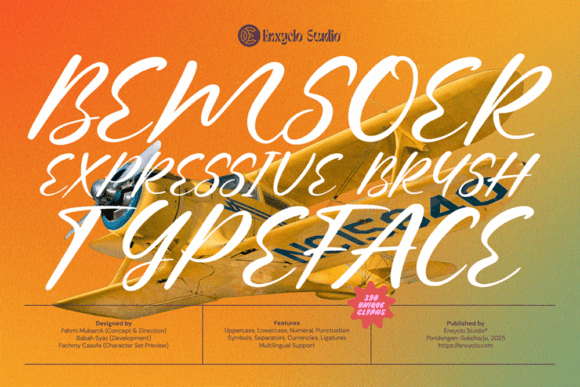
Bemsoer: Mastering Bold Brush Script Without Sacrificing Readability
Step into an era where artistry and charisma blend seamlessly with Bemsoer. This dynamic and bold brush script font emanates a potent combination of energy, spontaneity, and vintage undertones, creating an organic finish that is genuinely enchanting to the eye. Rendered with an artistic hand, Bemsoer possesses an essence capable of breathing life into every letterform, radiating an irresistible allure that standard system fonts simply cannot replicate. However, owning a typeface with such distinct personality requires more than just installation; it demands intentional application. Ideal for projects that require a whisper of antiquity or a loud declaration of daring originality, this typeface serves as a dynamic tool in the designer’s arsenal, but only when wielded with precision.
Many creators are drawn to the aesthetic of hand-lettered scripts but often stumble during implementation. The most common error is treating a display font like Bemsoer as a utility typeface rather than a focal point. When used correctly, it thrives in both digital landscapes and print canvases, providing a range of usability that extends from poster headlines to creative advertising. When misused, however, even the most beautiful glyphs can become illegible noise. Understanding the balance between its expressive nature and functional design principles is the key to unlocking its full potential.
Avoiding the Legibility Trap in Display Typography
The primary mistake designers make with bold brush scripts is underestimating the impact of size and spacing on readability. Bemsoer is designed to be loud, but volume does not equal clarity. A frequent oversight is setting this typeface too small in an attempt to fit more information into a layout. Because the strokes are thick and the connections are fluid, reducing the point size causes the negative space within letters to close up. At smaller sizes, what looks like elegant ink flow on screen becomes a muddy blob in print or on mobile devices.
To correct this, reserve Bemsoer strictly for headlines, logos, and short pull quotes. If you find yourself needing to use it for body copy or subheads below 24 points, it is a signal to switch to a complementary sans-serif or serif font. Furthermore, avoid manually tightening the tracking (letter-spacing) on connected scripts. Unlike block letters, brush scripts rely on specific connection points. Artificially squeezing characters together breaks these natural ligatures and creates awkward overlaps that ruin the organic rhythm. Trust the font engineer’s default spacing; if the words feel too far apart at your desired size, the solution is usually to increase the font size, not decrease the tracking.
Overlooking the Power of OpenType Features
A significant missed opportunity occurs when users treat Bemsoer as a static set of characters rather than a dynamic system. Supported by a variety of features such as uppercase and lowercase letters, numbers, punctuation, symbols, separators, and currency signs, you will find over 390 unique glyphs designed to diversify your designs. Many beginners type out their text and accept the default rendering, unaware that they are ignoring half the font's value. This results in repetitive letterforms that look mechanical rather than handmade.
Furthering the flexibility of Bemsoer are the beautiful ligatures and stylistic alternates included in the character map. These are not merely decorative extras; they are essential for maintaining the illusion of hand-drawn authenticity. When two identical letters appear consecutively, or when a word ends abruptly, utilizing an alternate glyph smooths the visual transition. Before finalizing any design, open the Glyphs panel in your software of choice. Experiment with different swashes for capital letters and alternative endings for lowercase characters. This extra step transforms a generic computer-generated line into a bespoke typographic element that feels custom-drawn for the specific project.
Contextual Misalignment and Brand Voice
While Bemsoer carries vintage undertones, assuming it automatically fits every "retro" or "nostalgic" brief is a strategic error. The font has a bold, energetic charisma that leans towards mid-century advertising and rock-and-roll aesthetics rather than delicate Victorian elegance. Using it for a luxury spa brand or a somber memorial service creates a cognitive dissonance that confuses the audience. The typeface communicates confidence and playfulness; if your message requires subtlety or solemnity, this bold brush script may undermine your communication goals.
From retro and vintage designs, editorial layouts, handmade product labels, fashion branding, and music packaging to quote graphics and engaging social media visuals, immerse your project in authenticity with Bemsoer, but always verify the tonal match first. Create a mood board before committing to the typeface. Place Bemsoer alongside your photography, color palette, and copy. Does the energy of the lettering amplify the image, or does it compete with it? For example, in fashion branding, this font pairs exceptionally well with high-contrast photography and minimalist layouts. In contrast, placing it over a busy, textured background without adequate masking or drop shadows will destroy legibility and visual hierarchy.
Technical Considerations for Global and Multi-Platform Use
For marketers and entrepreneurs targeting international audiences, neglecting language support is a costly limitation. Fortunately, Bemsoer includes multilingual support, perfect for broadening your global reach. However, users often fail to test accented characters and special punctuation in context. A logo might look perfect in English but break visually when localized for French, Spanish, or German markets because the accent marks were not optically adjusted for the bold brush style. Always test your primary keywords and brand names in all target languages before launching a campaign.
Additionally, consider the technical environment where the font will live. On social media platforms where video thumbnails are compressed, the intricate details of brush textures can artifact or blur. Test your designs at actual viewing sizes on mobile screens. If the fine edges of the brush strokes disappear against a dark background, you may need to add a subtle outer glow or stroke to maintain definition. In print, ensure your resolution is sufficient to capture the organic edge quality; pixelated brush scripts look unprofessional and cheapen the perceived value of handmade product labels or packaging.
Making Informed Decisions Before Purchase
Before adding Bemsoer to your library, evaluate your current workflow and project pipeline. Ask yourself if you have enough upcoming projects that justify a bold display script. While versatile within its niche, it is not a workhorse text font. Beginners sometimes buy a trendy script for a single Instagram post and then never use it again. Instead, assess whether this typeface fills a gap in your existing collection. Do you already own three other vintage brush scripts? If so, Bemsoer needs to offer something distinctly different—such as superior ligature support or a unique weight distribution—to warrant the investment.
Finally, remember that typography is a partnership between the font and the designer. Bemsoer provides the raw materials of energy, spontaneity, and vintage charm, but the success of the design depends on your restraint and attention to detail. By avoiding common pitfalls regarding sizing, spacing, feature utilization, and contextual appropriateness, you ensure that this typeface remains a powerful asset rather than a decorative distraction. Approach each project with the understanding that the font is there to serve the message, not overshadow it. When applied with this level of care, Bemsoer delivers the authentic, charismatic impact that modern audiences crave.