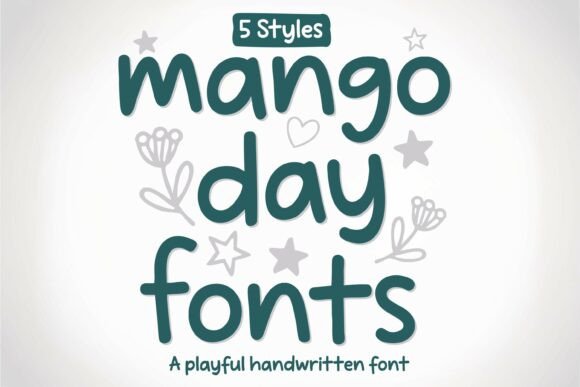
Mango Day: A Guide to Playful Handwritten Typography
In the vast landscape of digital typography, finding a typeface that balances genuine whimsy with functional readability can be a significant challenge for designers and creators. Mango Day emerges as a delightful solution to this common design dilemma. This handwritten display typeface brings a charming, bubbly personality to visual projects without sacrificing clarity. Unlike many novelty fonts that prioritize aesthetic quirk over legibility, Mango Day maintains a lovely, chunky yet clean aesthetic. It is specifically engineered to ensure that lighthearted communication remains accessible and professional, even when the tone is intentionally casual.
For general consumers, business owners, and creative professionals, understanding the nuances of this font family is essential before integrating it into a project. The typeface is not merely a decorative element; it is a versatile tool designed for specific contexts ranging from children’s media to artisanal packaging. By exploring its five distinct styles and practical applications, users can determine if Mango Day aligns with their brand identity or personal creative goals.
Defining the Visual Character and Aesthetic
The primary appeal of Mango Day lies in its approachable design language. The typeface features rounded edges and a friendly demeanor that immediately softens the visual impact of any layout. In an era where minimalist and stark sans-serif fonts dominate corporate branding, this whimsical typeface offers a necessary counterpoint. It evokes feelings of nostalgia, warmth, and innocence, making it particularly effective for brands that wish to appear human-centric and welcoming.
However, the "hand-drawn" look is carefully controlled. Many script or marker fonts suffer from inconsistent baselines or erratic stroke widths that make reading difficult at smaller sizes. Mango Day avoids this pitfall through a disciplined construction. The letters possess a uniform weight and spacing that mimics hand-lettering while retaining the structural integrity required for modern digital and print media. This balance allows the font to function effectively in headlines and short body copy where personality is paramount, ensuring the message is never lost to illegibility.
Exploring the Five-Style Font Family
Versatility is often the deciding factor when selecting a typeface for a comprehensive branding kit. The Mango Day collection includes five playful styles, each serving a unique hierarchical purpose within a design system. Understanding these variations allows creators to build dynamic layouts using a single cohesive family.
- Mango Day Regular: The foundational style of the family. It establishes the core bubbly personality and is ideal for primary headlines, logos, and prominent call-to-action buttons. Its chunky nature ensures it holds up well against colorful backgrounds.
- Mango Day Bold: Designed for maximum impact. This weight increases the visual density of the letterforms, making it perfect for emphasis, subheadings, or situations where the text needs to compete with busy imagery. It retains the rounded softness of the regular weight but commands more attention.
- Mango Day Line: A stylistic variation that introduces linear details within the strokes. This adds texture and visual interest without introducing new colors. It is exceptionally useful for creating depth in flat designs or for distinguishing secondary information from primary headers.
- Mango Day Outline: An open-faced version of the typeface. This style is invaluable for layering over photographs or complex patterns where a solid fill might obscure important visual details. It provides the shape and recognition of the font while maintaining transparency.
- Mango Day Duo: A two-tone style that incorporates built-in color separation. This feature simplifies the design process by eliminating the need for manual masking or layering in vector software. It is particularly effective for retro-inspired designs, candy-themed packaging, or vibrant social media graphics.
Practical Applications Across Industries
The utility of Mango Day extends far beyond simple decoration. Its specific characteristics make it a strategic choice for several key industries and project types. When evaluating suitability, consider how the font's emotional resonance aligns with the target audience's expectations.
Children’s Media and Educational Materials
This is perhaps the most natural habitat for the Mango Day typeface. In educational settings, typography plays a crucial role in engagement and comprehension for early readers. The rounded, non-threatening shapes of this font reduce cognitive load for young audiences. It is frequently utilized in nursery wall art, flashcards, book covers, and classroom signage. The distinctiveness of the letterforms helps children recognize characters, while the playful tone makes learning materials feel like entertainment rather than instruction.
Artisanal Branding and Packaging
For small businesses, particularly those in the food, craft, and lifestyle sectors, packaging serves as a silent salesperson. Mango Day offers a sweet and distinctive cartoon-style font that signals handmade quality and authenticity. It works exceptionally well on jam labels, bakery boxes, candle tags, and organic product wrappers. The font suggests a personal touch that mass-produced, standard typefaces cannot replicate. For business owners, using this typeface can help differentiate products on crowded shelves by communicating a sense of care and boutique craftsmanship.
Creative Posters and Social Content
In the realm of digital content creation, grabbing attention within seconds is mandatory. Creative posters, Instagram stories, and YouTube thumbnails benefit from the high contrast and bold personality of Mango Day. The variety of styles allows content creators to maintain brand consistency across different formats while keeping visuals fresh. For example, a creator might use the Bold style for a video title, the Outline style for on-screen captions, and the Duo style for end-screen elements, creating a unified yet varied visual experience.
Evaluating Suitability and Best Practices
While Mango Day is a powerful design asset, it is not a universal solution. To use it effectively, one must understand both its strengths and its limitations. Adopting a people-first approach to typography means prioritizing the reader's experience over the designer's preference for novelty.
Readability and Hierarchy Considerations
Despite its clean aesthetic, Mango Day remains a display typeface. It is optimized for large sizes and short bursts of text. Users should avoid setting long paragraphs or dense informational blocks in this font. Doing so can cause visual fatigue and diminish the charm that makes the typeface special. Instead, pair Mango Day with a neutral, highly legible sans-serif or serif font for body copy. This contrast not only improves readability but also elevates the display font, allowing its personality to shine without overwhelming the viewer.
Contextual Appropriateness
The bubbly personality of Mango Day dictates its appropriate context. It is inherently informal and youthful. Therefore, it may be unsuitable for industries requiring gravitas, such as legal services, financial institutions, or luxury fashion (unless used ironically). Before selecting this typeface, ask whether the target demographic associates rounded, handwritten aesthetics with trust and value in your specific niche. If the goal is to convey seriousness or exclusivity, this font may send conflicting signals. However, for community events, family-oriented services, and creative hobbies, it hits the perfect emotional note.
Technical Implementation Tips
When working with the Mango Day family, pay close attention to leading (line spacing) and tracking (letter spacing). Because the characters are chunky and rounded, they often require slightly more generous spacing than standard geometric fonts to prevent them from feeling cramped. Additionally, when using the Duo or Line styles, ensure sufficient color contrast between the internal details and the background. Low contrast can render these intricate stylistic alternates invisible at smaller sizes or on lower-resolution screens.
The Value of Intentional Typeface Selection
Choosing a typeface like Mango Day is an exercise in defining brand voice. Typography is not merely a vessel for words; it is the tone of voice made visible. When a designer selects this specific handwritten display typeface, they are making a conscious decision to communicate friendliness, accessibility, and joy. For the general consumer encountering this font on a product or poster, the reaction is often subconscious but immediate: a sense of ease and invitation.
Ultimately, the success of using Mango Day depends on intentional application. It thrives when given space to breathe and when paired with complementary visual elements. Whether you are designing a nursery print, launching a new line of organic snacks, or creating engaging educational content, this font family offers the tools necessary to infuse your work with genuine character. By respecting its limitations and leveraging its diverse styles, creators can harness the full potential of this charming typeface to connect with audiences in a meaningful, memorable way.