Almond Stocking: A Practical Guide to Using This Modern Sans Serif Effectively
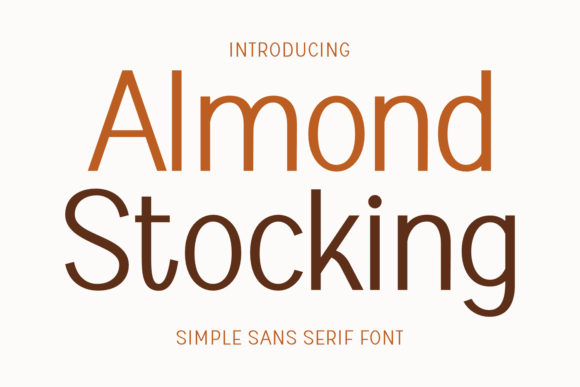
In the crowded landscape of contemporary typography, finding a typeface that balances warmth with professional clarity is often a challenge. Almond Stocking has emerged as a notable solution for designers and creators seeking a clean, simple, and slightly rounded sans serif font. Its modern, friendly aesthetic is defined by medium-thin monoline strokes and clear, uncomplicated letterforms. While its versatility makes it an attractive option for corporate branding, recipe cards, and casual apparel, its specific design characteristics require thoughtful application. Treating Almond Stocking like a generic utility font can lead to legibility issues or a diluted visual impact. Understanding the nuances of this typeface is essential for achieving the straightforward, approachable, and minimalist voice it was designed to convey.
Understanding the Monoline Constraint
The most defining feature of Almond Stocking is its monoline stroke weight. Unlike traditional sans serifs that vary in thickness to mimic calligraphic pen strokes, Almond Stocking maintains a consistent width throughout every character. This uniformity contributes to its modern and democratic feel, but it also introduces specific technical limitations that beginners often overlook.
A common mistake occurs when designers use this typeface at very small sizes for dense body text. Because the strokes are medium-thin and lack high contrast, they can visually vibrate or disappear against certain backgrounds when scaled down below 10pt. The "friendly" rounded terminals that look charming in headlines can reduce the internal white space (counters) in lowercase letters like 'a', 'e', and 'o' at smaller sizes. When these counters close up, readability suffers significantly, especially on low-resolution screens or in print materials with heavy ink gain.
To avoid this, reserve Almond Stocking primarily for display purposes, subheadings, captions, and short-form content where its personality can shine without compromising function. If you must use it for longer paragraphs, increase the point size slightly above your standard body copy baseline and test rigorously across multiple devices. For extensive reading material, consider pairing Almond Stocking with a more robust, high-x-height sans serif for the main text while using Almond Stocking to establish tone in titles and pull quotes.
Navigating Tone in Corporate and Commercial Contexts
Almond Stocking is frequently marketed as perfect for clean corporate branding, yet there is a fine line between "approachable" and "informal." Many entrepreneurs and marketers make the error of assuming that because a font is labeled "modern" and "friendly," it automatically suits every business context. The slight rounding and geometric simplicity of Almond Stocking inherently soften communication. While this is ideal for lifestyle brands, educational platforms, or wellness products, it can inadvertently undermine authority in sectors requiring gravitas, such as finance, law, or heavy industry.
Before committing to this typeface for a brand identity, evaluate the emotional weight of your messaging. If your goal is to appear innovative yet accessible, Almond Stocking is a strong candidate. However, if your primary objective is to convey heritage, luxury, or strict institutional trust, the font’s casual geometry may create cognitive dissonance for your audience. A better approach is to audit your existing brand touchpoints. Test Almond Stocking in real-world scenarios—on a business card, a website hero section, and an invoice header—before finalizing the decision. Ask stakeholders specifically whether the typeface feels "welcoming" or "unserious." Honest feedback at this stage prevents costly rebranding efforts later.
Optimizing Spacing and Hierarchy
Because Almond Stocking features uncomplicated letterforms, it relies heavily on proper spacing to maintain its aesthetic integrity. A frequent oversight involves using default tracking (letter-spacing) settings straight out of the box. Monoline fonts often require optical adjustments that differ from variable-stroke typefaces. At larger display sizes, the default spacing may appear too tight, causing the rounded terminals to feel crowded. Conversely, at smaller sizes, the spacing might feel too loose, breaking the word shape and slowing reading speed.
- Display Settings: When using Almond Stocking for logos or large headlines, apply slight positive tracking (+10 to +20 units) to let the rounded forms breathe. This enhances the airy, minimalist quality of the design.
- Caption and UI Text: For user interfaces or recipe cards, tighten the tracking slightly (-5 to -10 units) to improve word recognition. The goal is to keep the eye moving smoothly across the uniform strokes.
- All-Caps Usage: Be cautious with all-caps settings. Rounded sans serifs can sometimes look childish or overly decorative when set entirely in uppercase. If all-caps are necessary for navigation or labels, increase both tracking and line height to prevent the text block from feeling dense and aggressive.
Practical Application in Recipe Cards and Apparel
Two of the most popular use cases for Almond Stocking are modern recipe cards and casual apparel. Both applications present unique environmental challenges that digital mockups often fail to reveal. In culinary design, legibility is paramount; a cook glancing at a recipe card from a distance needs instant recognition. The medium-thin strokes of Almond Stocking can struggle against textured paper backgrounds or in low-kitchen lighting conditions. Always ensure sufficient contrast ratios and avoid placing this typeface over busy food photography without a solid backing or overlay.
For apparel, the physical reproduction method dictates success. Screen printing, embroidery, and heat transfer all interact differently with monoline strokes. Thin lines may break during embroidery, while rounded edges can bleed in screen printing if not properly trapped. Before ordering bulk merchandise, request a physical sample printed on the actual garment fabric. Verify that the "slightly rounded" aesthetic translates accurately through the manufacturing process. Sometimes, a bolder weight or a modified version of the file is necessary to preserve the design intent on textile substrates.
Evaluating Licensing and Technical Compatibility
Beyond aesthetics, practical logistics determine whether Almond Stocking is a viable long-term asset. Creators often download a font based on its visual appeal without verifying licensing terms for their specific commercial needs. Ensure the license covers all intended mediums, including web embedding, app usage, and merchandise resale. Desktop licenses rarely cover e-book publishing or server-based PDF generation, so read the EULA carefully to avoid legal exposure.
Additionally, check the character set coverage before starting a project. While Almond Stocking excels in English-language designs, verify its support for accented characters, currency symbols, and punctuation marks relevant to your market. A missing glyph can force you to mix typefaces mid-project, disrupting the cohesive minimalist voice you aimed to achieve. Confirming OpenType features, such as stylistic alternates or ligatures, can also unlock additional versatility, allowing you to customize the "friendly" aesthetic without sacrificing consistency.
Making an Informed Typographic Choice
Almond Stocking offers a distinct blend of modern simplicity and approachable warmth that few other typefaces provide. Its strength lies in its ability to humanize digital interfaces and add softness to structured layouts. However, its monoline construction and rounded details demand respect for typographic fundamentals. By acknowledging its limitations regarding size, contrast, and tonal appropriateness, you can leverage its strengths effectively.
Ultimately, successful typography is about alignment between form and function. Use Almond Stocking when your project benefits from a gentle, uncomplicated visual voice. Avoid it when density, authority, or extreme scalability are primary requirements. Test thoroughly, adjust spacing optically, and validate technical specifications early in the workflow. When applied with intention rather than habit, Almond Stocking becomes more than just a trendy font choice; it becomes a reliable tool for clear, empathetic communication.