Cyfor: A Bold Expanded Sans-Serif for Tech Branding
In the crowded landscape of digital design, typography often serves as the primary differentiator between a generic template and a memorable brand identity. For designers working within technology, gaming, and futuristic aesthetics, finding a typeface that balances aggressive visual impact with functional legibility is a constant challenge. Cyfor emerges as a specialized solution to this problem, offering a bold, expanded sans-serif family engineered specifically for high-impact digital environments. Unlike traditional grotesques that prioritize neutrality, Cyfor embraces width and geometric precision to create a commanding presence that demands attention without sacrificing readability.
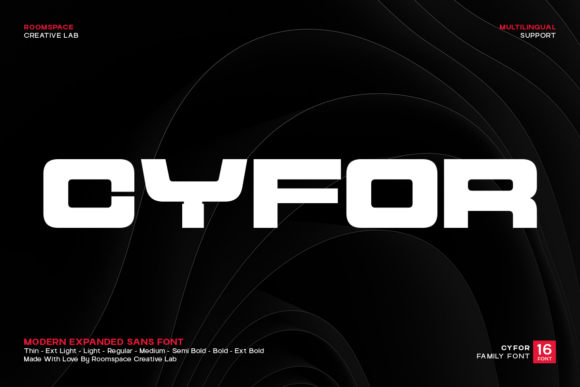
This typeface is not merely a stylistic choice; it is a strategic tool for communication. With 16 distinct weights ranging from Thin to Extra Bold, Cyfor provides the granular control necessary for complex design systems. Whether you are crafting a responsive website header, designing esports merchandise, or laying out technical packaging, the family’s extensive range ensures typographic consistency across every touchpoint. The expanded proportions naturally occupy more horizontal space, making it exceptionally effective for headlines and display text where vertical real estate is limited but visual weight is required.
Geometric Precision Meets Functional Width
The defining characteristic of Cyfor is its uncompromising geometric structure combined with an expanded aspect ratio. In typographic terms, "expanded" does not simply mean stretched; it refers to a deliberate redesign of letterforms to accommodate wider counters and broader stances. This results in a typeface that feels stable and grounded. For tech branding, this stability communicates reliability and innovation simultaneously. The clean lines avoid the decorative flourishes of retro-futurism, opting instead for a contemporary aesthetic that aligns with modern UI/UX principles.
From a usability standpoint, the wide proportions offer distinct advantages in digital interfaces. In dashboard design or data visualization, condensed fonts can sometimes feel cramped, while standard widths may lack hierarchy. Cyfor sits in a sweet spot where the extra width aids in scanning and recognition. The open apertures and consistent stroke widths maintain clarity even at smaller sizes or on lower-resolution screens, which is critical for gaming interfaces and mobile applications where pixel density varies. This versatility allows designers to use a single type family for both massive hero banners and functional navigation elements, streamlining asset management and reducing load times.
Strategic Applications Across Industries
While Cyfor is rooted in futuristic design, its utility extends far beyond sci-fi movie posters. Its robust construction makes it suitable for a variety of professional and creative contexts where authority and modernity are paramount.
- Esports and Gaming Identity: The competitive gaming industry requires visuals that convey energy and aggression. Cyfor’s heavier weights provide the necessary impact for team logos, tournament overlays, and streaming graphics. The geometric nature pairs well with angular iconography and neon color palettes common in this sector.
- Technology and SaaS Branding: Tech companies often struggle to appear innovative without looking cliché. Cyfor offers a sophisticated alternative to overused tech fonts. Its clean geometry suggests precision engineering and forward-thinking development, making it ideal for landing pages, app stores, and software documentation.
- Sports and Athletic Marketing: Beyond esports, traditional sports branding benefits from the typeface's dynamic width. It performs exceptionally well on jerseys, stadium signage, and social media templates where text must be readable from a distance or in motion.
- Editorial and Poster Design: For print media, the expanded format creates natural rhythm and texture in layout. Designers can utilize the thinner weights for elegant, architectural subheads while reserving the Extra Bold styles for impactful cover lines.
Navigating the 16-Weight System
Having access to 16 weights is a significant advantage for establishing visual hierarchy, but it requires disciplined implementation. A common mistake when using large type families is relying too heavily on the extreme ends of the spectrum. To maximize Cyfor’s potential, consider the middle weights for body copy or secondary information. The Regular and Medium weights retain the family’s distinctive width while being comfortable for extended reading, bridging the gap between display and text usage.
For web projects, performance is always a consideration. While having 16 styles available is excellent for print and comprehensive branding guidelines, digital implementations should be selective. Utilizing variable font technology, if supported, can mitigate file size concerns. Otherwise, strategically selecting three to four key weights (e.g., Light, Regular, Bold, Extra Bold) covers most UI needs without bloating CSS requests. This approach maintains the design system's integrity while ensuring fast load times, which directly impacts user experience and SEO rankings.
Multilingual Support and Global Reach
Modern branding rarely stays within a single language market. Cyfor’s inclusion of multilingual support is a practical necessity for global tech products and international campaigns. When expanding into new markets, maintaining brand consistency is difficult if the primary typeface lacks necessary glyphs or diacritics. Cyfor addresses this by providing comprehensive character sets that preserve the geometric aesthetic across different languages. This ensures that a German headline carries the same visual weight and stylistic coherence as its English counterpart, preventing the disjointed look that occurs when designers are forced to substitute fallback fonts.
Pairing and Layout Considerations
Because Cyfor has such a strong personality, pairing it requires intentionality. Its expanded, geometric nature contrasts beautifully with neutral humanist sans-serifs or classic serif typefaces for body text. Avoid pairing it with other condensed or highly decorative display fonts, as this creates visual conflict. Instead, let Cyfor handle the heavy lifting in headers and navigation, allowing a quieter companion font to manage long-form content. This contrast enhances readability and guides the user’s eye through the information architecture.
In layout design, respect the whitespace. Expanded typefaces consume horizontal space rapidly, so margins and padding must be adjusted accordingly. Tight tracking can make the letters feel suffocated, while generous spacing emphasizes the futuristic, airy quality of the design. For logo design, the wider stance provides a solid foundation for wordmarks, often eliminating the need for additional graphical symbols. The typeface itself becomes the icon, reducing cognitive load and increasing brand recall.
Evaluating Fit for Your Project
Before committing to Cyfor, assess whether your project truly calls for an expanded aesthetic. If your goal is to maximize information density in a confined space, such as a financial table or legal document, a condensed or standard-width typeface may be more appropriate. However, if your objective is to establish a bold, modern identity that stands out in feeds, storefronts, or app icons, Cyfor’s specific attributes become assets rather than constraints.
Ultimately, typography is about solving communication problems. Cyfor solves the problem of invisibility in saturated digital markets. By combining technical versatility with a distinct visual voice, it empowers designers to create work that is not only aesthetically striking but also functionally superior. Whether you are an independent creator building a portfolio or a brand manager overseeing a corporate rebrand, understanding the specific strengths of this typeface allows you to leverage its full potential effectively.